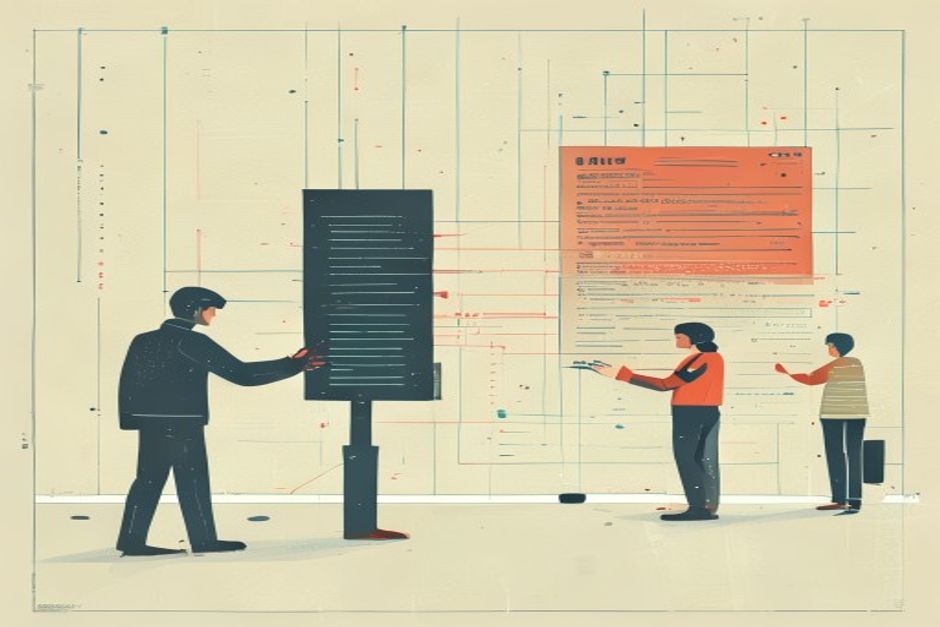
A supervisor hands off to a worker, the worker calls a tool, the tool calls an MCP server — and the run stalls. Here's how to make that legible with OpenTelemetry spans and one trace.
Autonomous SecOps crossed from preview into general availability this month. For a founder with no security team, the real news is that the floor moved on both sides at once — defense and offense.
Both let you own the control flow instead of renting a black-box agent loop. The choice comes down to one question — is the hard part your org chart of agents, or the events between your steps?
Three ways to extend a Claude agent that founders keep confusing — one teaches it a workflow, one gives it a capability, one buys it a clean context. Here's the decision rule.
Anthropic's Outcomes feature wraps an agent in a grader that scores every attempt against a rubric you write, feeds back the gap, and makes it try again — turning a one-shot loop into a self-correcting one. Here's what it does, what it costs, and when a founder should turn it on.
Managed-agent vaults store a secret as an opaque placeholder inside the sandbox and swap in the real value at the network edge — so a prompt-injected agent can't leak a key it was never shown. Here's the exact call, the injection_location rules, and the two clients this breaks.
Three ways to hand real work to an agent — finished documents, governed cloud agents, or tasks that keep running while your laptop is closed. A decision guide for a small team picking exactly one, with what's verified and what isn't.
You'll ship a working `writing-pr-descriptions` skill that teaches an agent your exact PR format once — then reuses it everywhere without re-prompting.
An AI agent is a while-loop around one model call. Here's the ~90 lines of Python that does what LangGraph does for an MVP — and the three seams where a framework starts to earn its keep.
The same SKILL.md that works in Claude Code can quietly break on the API — no network, no package install, and it isn't even uploaded there. Here's what changes per surface before you ship.
Google, Microsoft, and AWS now speak the Agent2Agent protocol natively. Here's the honest line on when that matters for a team of one — and when it's plumbing you can safely ignore.
An event-driven durable execution engine for background jobs and long-running agent steps — for solo founders who don't want to run their own queue and worker fleet.
Keep LangGraph for orchestration, get a React streaming chat for free. The rewritten adapter turns a graph stream into an AI SDK UIMessage stream in a few lines.
Kimi K3 landed July 16 with dated open weights; Qwen3.8-Max previewed July 19 claiming 'second only to Fable 5.' One is a shippable artifact, the other is a claim. Here's the founder's read on both — access, price, openness, and what's actually verified.
The July 20 release folds durable execution into the same 'capabilities' system V2 introduced. Temporal, DBOS, and Prefect now attach in one line — and the wrapper-agent classes you may have shipped are on the way out.
The July 8 NemoClaw blueprint makes self-hosting open agents a real option — but for a team of one, the deciding factor is token volume, not vendor benchmarks.
The Python 1.12 and .NET 1.14 releases landed July 21 — and the headline isn't a new agent trick. It's that your agent becomes an MCP server, and its memory stops dying with the session.
The stateless spec is frozen and backward-compatible. The thing that bites you this week is the SDK upgrade — a TLS trust-store swap, a package split, and an opt-in cancellation flag.
The 2026-07-28 spec makes MCP stateless — but a stateless server still needs to ask the user 'are you sure?' mid-call. Here's how MRTR replaces the held-open SSE stream, and how the new Mcp-Method header lets a plain gateway route your traffic.
The stateless spec stopped being a PDF: real Python, TypeScript, Go, and C# betas landed June 29. Here's what shipped, the exact install lines, and the one week you have to validate a real server before the surface freezes.
The 2026-07-28 spec says you can drop sticky sessions — but a leftover in-memory map will still pin you. Here's the test that catches it before July 28.
LangGraph 1.2 shipped two new streaming APIs on top of the old stream_mode dicts. Here is what version="v2" and version="v3" actually change, and which one to reach for.
Moonshot's 2.8T giant and Thinking Machines' 975B base launched 24 hours apart. The decision isn't 'which open model' — it's rent a bigger generalist or own a specialized base.
Now that /fork spins off real background sessions, 'I'll just trust it' stops scaling. Here's how to make parallel Claude Code agents observable: the agents view, --forward-subagent-text, stream-json, and the 'Needs input' state that tells you which one is stuck.
A skill is a prompt in a folder, so a bad edit ships silently — no compile error, no failed test, just an agent that quietly behaves differently. Here's how to put skills under version control and get back to a known-good state in under a minute.
The stateless rewrite got the headlines; the auth hardening is what will break your integration on July 28. Three client-side fixes — validate iss, declare application_type, discover the server the right way — with the exact code.
You picked Kimi K3 for bulk and Claude Sonnet 5 for the hard tasks — now wire them behind one interface so switching is a config change, not a rewrite. Here's a ~40-line router with task-based selection and automatic failover, using the OpenAI SDK pointed at an OpenAI-compatible gateway.
Claude Code 2.1.212 shipped hard, session-scoped ceilings on subagent spawns and web searches — both default to 200. Here's what each one actually stops, why the spawn cap is a loop-breaker and not a spend cap, and how to tune the three knobs that really govern a runaway agent's bill.
Agentjacking hijacks your coding agent through data it already trusts — a poisoned Sentry error, a booby-trapped Jira ticket. No server is breached and no human approves anything. Here is the concrete config that breaks the attack, and why deny rules alone won't.
v0.19.0 (July 20) cut first-turn time-to-first-token ~80%, streams reasoning live, and adds an independent-LLM approval reviewer and a crash-proof delivery ledger. The coding-agent race is being run on the harness, not the model.

 🎧 Listen
The Stack
🎧 Listen
The Stack