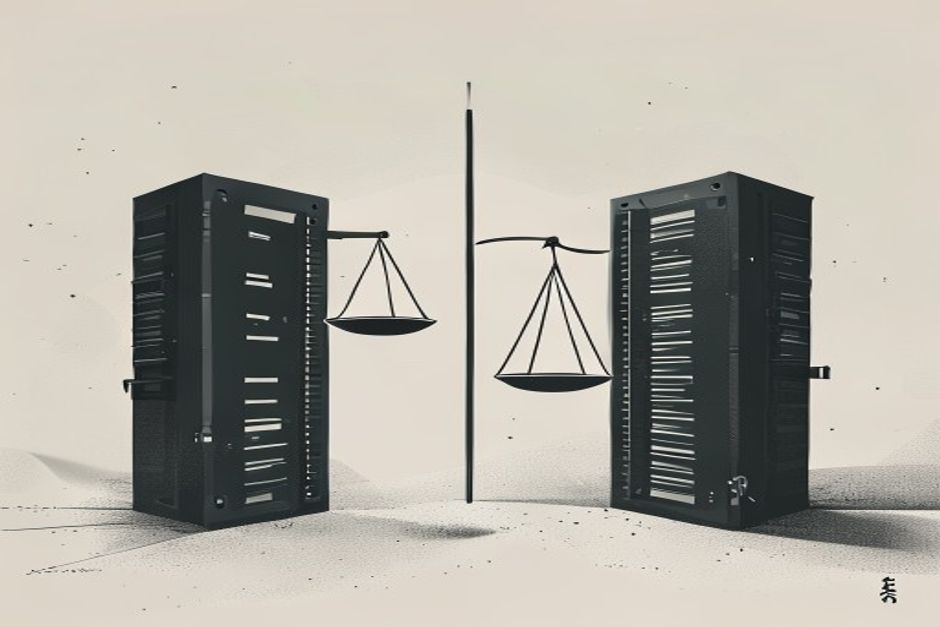
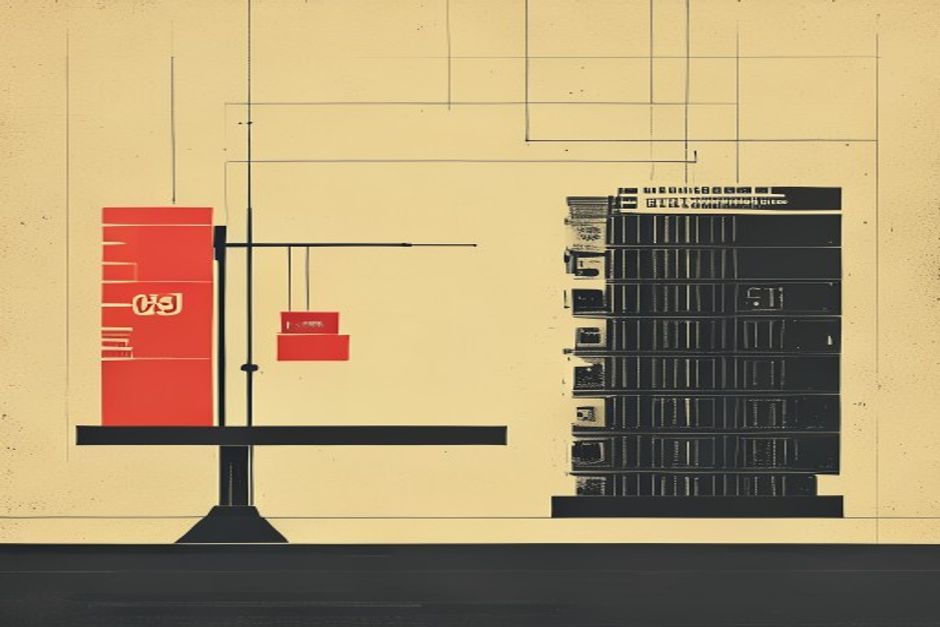
Dili's Series A closed this week on a design most founders get backwards: the model reads the mess, a deterministic rules engine gives the answer. In any regulated vertical, that split is the product.
Insight Partners led a $40M Series B into a company whose whole pitch is that your agents are only as good as the data plumbing feeding them. The round is small; the category it names is the tell — the hard part of production agents stopped being the model.
Same open-weight model, two very different servers. One is a datacenter throughput engine; the other runs anywhere. Here's which one your agent backend actually wants — and the GGUF caveat to know first.
The Hoffman–Pincus computer-use lab beats GPT-5.4 and Opus 4.6 on two benchmarks with a 32B model at ~1/10th the cost — and bills 20% of the savings, not per seat. That pricing line is the whole thesis.
A real monthly budget for a solo founder running an AI product: nine line items, honest ranges, and the single cheapest cut on each. What the $206B agent-spend headlines never show you at your scale.
Nvidia's July 27 stake in Safe Superintelligence buys $5B of equity and hands SSI an order-of-magnitude more compute on Vera Rubin. The number that matters to a founder isn't $5B — it's who gets the next chips, and how.
Your cost floats with token usage; your price is usually a fixed number. That mismatch is where AI startups quietly go underwater. Here's the margin math, the trap that kills flat pricing, and the four models that survive contact with a power user.
The distilled one-hour version is back on every founder's feed. The five things it says you need to build an agent — and the one line on where each actually breaks in production.
Anthropic's unreleased Claude Mythos found a structural flaw in HAWK — a NIST post-quantum signature candidate — in about 60 hours. HAWK is now withdrawn. The panic and the non-panic are both worth getting exactly right.
A week after Neo raised $100M to inventory every agent you can't see, Hush ($30M) and Act ($60M) both closed on July 28 to solve the next sentence: your agents hold standing permissions they never use and no one can pull back.
SAP's €1B tabular-model buy came with the line 'models stay open.' True — but every TabPFN weight past v2 ships under a non-commercial license that forbids production use and even 'internal commercial decision-making.' Here's the version-by-version reality before you pipe your CSV through it.
Both frontier labs stood up enterprise-services arms in 2026 — here's how the two ventures differ, and what it means when your buyer can hire the model-maker's own engineers to build what you sell.
Pilot Protocol came out of stealth this week with 'the internet for agents' — every agent gets an address, discovers peers, and installs tools with no human in the loop. The company says 250,000 agents already joined, most without their owners knowing. That last clause is the whole story.
Lovable is reportedly in talks to double to $13.2B after a $500M June run rate; Replit raised $400M at $9B. The category is valued on how fast revenue compounds, not on moats — which is exactly where a solo founder's lock-in risk lives.
Kimi K3's weights landed and it took the open-weight crown on two benchmarks at once. For most founders that changes nothing: the decision is still license and serving cost, and on those K3 is often the wrong default.
AI-agent startups still raised ~$1.8B in July 2026 — but ~62% went to Series B and later, at an average of ~$150M, to companies with $25M+ in revenue. The seed-stage land grab is over. Here's what that changes for a solo founder.
Qoder moved security review from after-the-fact scanning to inside the coding session — three progressive layers that catch and fix issues before the agent's code is ever committed. Here's what it is, who it's for, and what it costs.
A new security-agent model claims state-of-the-art on CyberGym. The benchmark's own authors measured the best model combos at roughly 20%. Here's how a founder verifies a security-agent claim before granting it access.
The real bottleneck in AI compute was never the chip — it's the high-bandwidth memory stacked next to it. Nvidia just pre-committed a huge slice of SK hynix's HBM4 output, and the marginal GPU a small team rents gets tighter from here.
Crunchbase and Axonius both shipped MCP servers on the same day this week. The point isn't the integration — it's that your product becomes callable inside ChatGPT and Claude, where your buyer already is.
HubSpot put its AI agents in a no-code console on July 23 — but the number a founder should read is the price tag: $1 per recommended lead, and you don't pay the support agent until it closes the ticket.
Anthropic says context editing cut tokens 84% and memory-plus-editing lifted task success 39%. Both figures are real. Neither says the model got smarter — they measure escaping a wall your agent may never hit, or may hit in a shape the benchmark never tested.
The July 25 release adds fp32 lm_head via head_dtype, a different attention backend per KV-cache group, and an object-store tier for KV offload. If you self-host inference, here's what to flip and what it buys.
The 2026-07-28 spec makes MCP stateless by default. That is the right call for most servers — but 'stateless protocol' does not mean 'stateless system.' Here is where your state really goes.
Accel and ICONIQ led a $34M Series A into Paper, a design platform that outputs real HTML and CSS so humans and AI agents edit the same artifact. ARR grew 25x since launch. The bet worth copying isn't the raise — it's the format.
One week put a frontier model at everyday prices and a workhorse model at throwaway prices. The honest answer for a team of one isn't 'pick one' — it's knowing which task tier each one wins, and routing by cost-per-completed-task instead of cost-per-token.
Voice control landed in Codex on July 23. Talking to one agent is a party trick. Talking over three of them while they work is a new job — foreman, not typist.
Two moves reset the backend math in one week — Opus 5 put frontier Claude at the everyday price on July 24, and Kimi K3's open weights drop days later at cheaper tokens. Here's the honest per-task decision for a team of one.
The largest open-weight model ever ships its weights tomorrow. For almost every solo founder, the right way to run it is the one that isn't yours to run.

 🎧 Listen
The Wire
🎧 Listen
The Wire