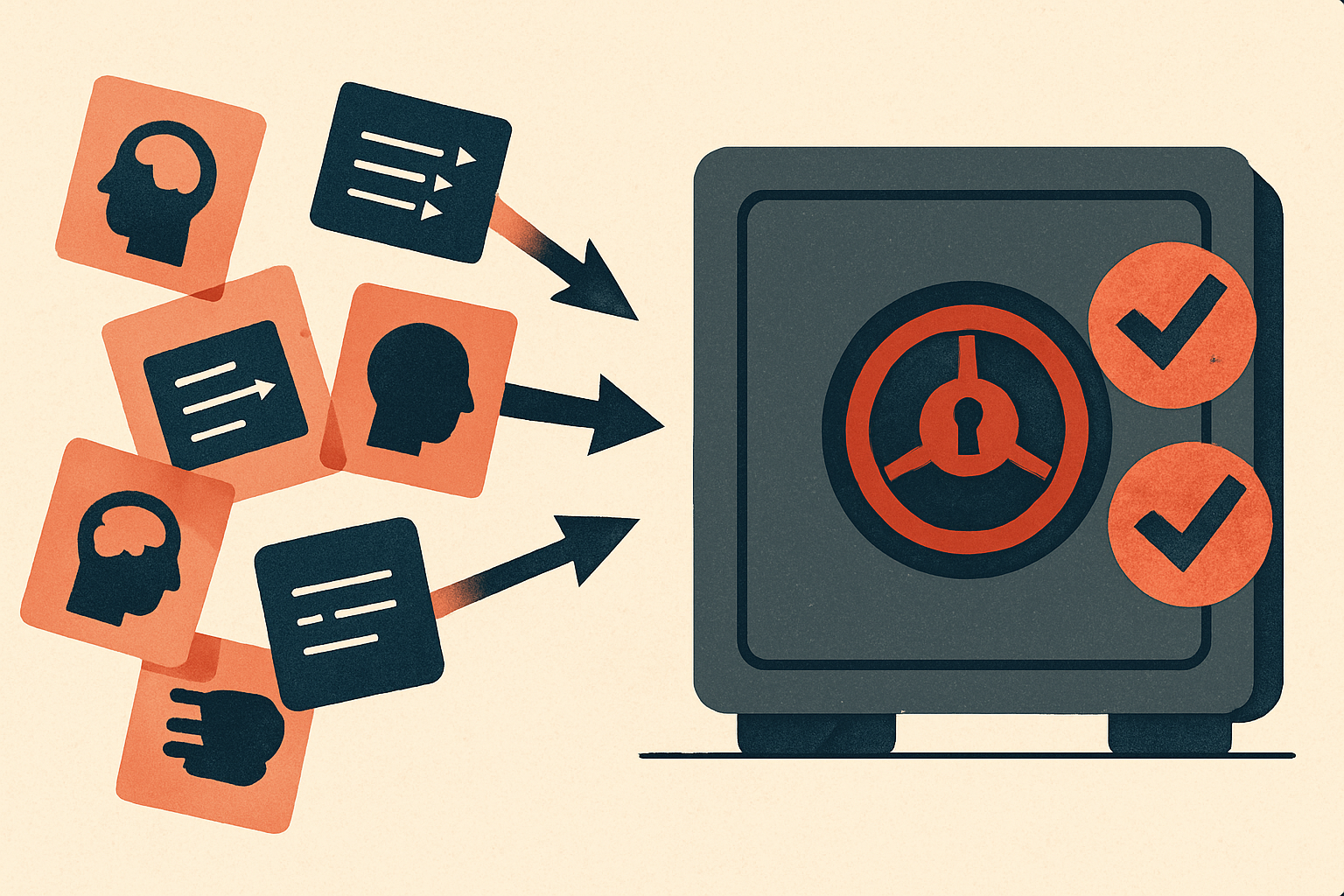
Harness, AWS, and a wave of governance startups now sell tooling to build, test, deploy, and watch AI agents like software. Here's the honest staging for a team of one — the three layers worth adopting early, and the three safe to ignore until you have staff.
The AI governance world just split into two incompatible blocs. Here's the config boundary that lets one codebase serve both — and why retrofitting it later costs 10x more than building it today.
The open standard from Stripe and OpenAI lets an agent complete a purchase from your store without a browser or a checkout page. Here are the five endpoints you implement, the payment token that keeps you in control, and the two defaults that will bite you.
From an empty file to a running fan-out-and-join agent in one sitting — using the minimal event bus that shipped stable on June 22, 2026. Copy-paste the steps, then swap in your own model and tools.
The 2026-07-28 spec killed the session handshake — so any replica now serves any request, and blue-green deploys finally become a five-command chore instead of an outage risk.
An "agent" is a while-loop around a model call with tool results fed back in — the framework is optional, and the spine that makes it a coding agent is about 40 lines.
Everyone's shipping 'agent skills from scratch' courses this week. Here's the actual build: one folder, one SKILL.md file, and the frontmatter that decides whether Claude ever loads it. Copy-paste ready.
An independent LLM reviewer sits between the allowlist that's too blunt and the human gate that's too slow. Here's how to wire one up, what it costs, and the failure mode nobody warns you about.
LM Studio shipped a standalone agent app on July 16 that runs open models on your own machine: repo-aware coding, document work, and local voice input, with a zero-data-retention cloud option for the heavy jobs. If sending code or client files to a hosted API is a blocker, this is the founder's local-first path.
You paste the same instructions into your agent ten times a day. Package them once as a SKILL.md — with dynamic context and pre-approved tools — and the agent just knows. A copy-paste walkthrough from empty folder to working /skill.
What RAGFlow is, who it's for, how to start in one docker command, what it costs (as of July 2026), and the honest catch — the open-source, Apache-2.0 engine that does deep document understanding first, so tables and layout survive the trip into your vector store.
What Laminar is, who it's for, how to start in one line, what it costs, and the honest catch — the open-source, Rust-built tracing-and-evals layer that treats a whole agent run as the unit, watches for stuck loops in plain English, and lets you query your traces with SQL.
What Grok Build is, who it's for, how to start, what it costs, and the honest catch — xAI's new coding agent runs Grok 4.5 by default, drives from a terminal UI, headless, or embedded over ACP, and undercuts the frontier tier at $2/$6 per million tokens.
Four methods — add, search, get_all, delete — turn a stateless agent into one that remembers a user across sessions. Here's the working code, the self-host-vs-managed choice, and the one setting that decides your bill.
The 1.15 line moved flow authoring from decorated Python classes toward data you can load, version, and review — plus one small feature that finally answers 'what did this agent run cost me?' Here's what actually shipped and whether it's worth the upgrade.
Lyzr let its own agent, SivaClaw, field 130+ investors and close a $100M Series B. Strip out the PR and three parts of the playbook generalize to a pre-seed deck — and three don't.
In a two-week stretch, the biggest agent checks skipped foundation models and landed on the reliability layer — evaluation, oversight, and domain decisioning.
GA4 added a native AI Assistant channel in May. It looks like the fix and it isn't — most AI-driven visits arrive with no referrer at all, so they hide inside Direct. The number that broke isn't your traffic. It's your attribution.
The open-source reactive TypeScript backend a solo founder can ship a realtime, AI-powered app on — database, functions, auth, file storage, cron, vector search, and an AI agent component in one platform.
What Agent Zero is, who it's for, how to start in one docker command, what it costs (free), and the honest catch — the self-hosted, multi-agent framework that hands an AI a real Linux desktop, a browser, and a shell.
Simon Willison shipped a Claude-Code-style coding agent as a plugin for his `llm` CLI. It's Apache-2.0, model-agnostic, and small enough to read end to end. Here's how to install it, wire up its permission gates, and drive it without letting it run wild in your repo.
Google's I/O 2026 made AI Mode the default and shipped an agent that reads the web for people. The unit of discovery is no longer the ranked link — it's the citation inside a generated answer. Here's how to earn it.
A demo that works is not a feature that ships. Here's a five-step ship gate — write the failure as an assertion, set the bar before you measure, and separate the pre-ship test from the live monitor — so 'reliable enough' becomes a number you can defend, not a feeling.
Your agent shouldn't wire money or delete a table without a human saying yes. AI SDK 7 has a first-class approval gate built in — here's the exact code, from a tool that pauses to the second call that resumes it.
What LiteLLM is, who it's for, how to start (SDK in one line, self-hosted gateway in two), what it costs, and the honest catch — the open-source LLM gateway that lets you swap providers with a string change instead of a rewrite.
A hosted memory-plus-skills layer for MCP agents that promises audit receipts and right-to-forget; free to start, but you're renting your agents' memory.
The listicle treats these as three serverless databases to choose between. They aren't — two answer 'database or backend?' and the third answers a different question entirely: shared table or one database per user?
When an agent takes a consequential action, 'trust me' isn't an answer. Here's a copy-paste pattern for a decision record that captures inputs, the rules that fired, the model's rationale, and any human override — so you can replay any decision months later and prove exactly why.
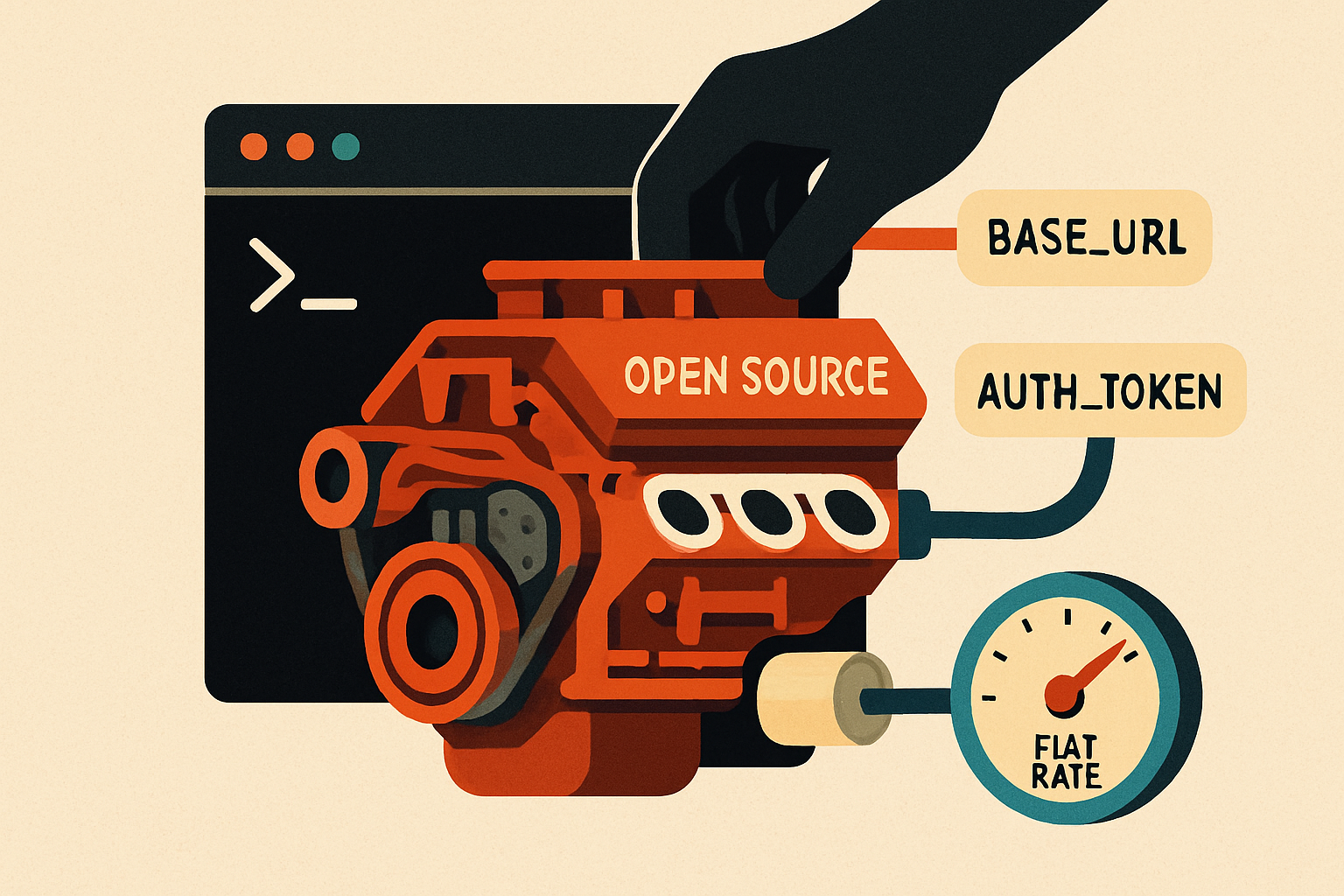
Keep the Claude Code workflow you already know; swap the engine underneath for an open-weight model on a flat monthly plan. The whole trick is two environment variables and one endpoint — here's the copy-paste path, plus the three mistakes that send people to a 404.

 🎧 Listen
The Wire
🎧 Listen
The Wire