Your agent doesn't fail because the model got dumb. It fails because you let its context window rot. Here is the four-move playbook — with the exact Claude API calls under each move.
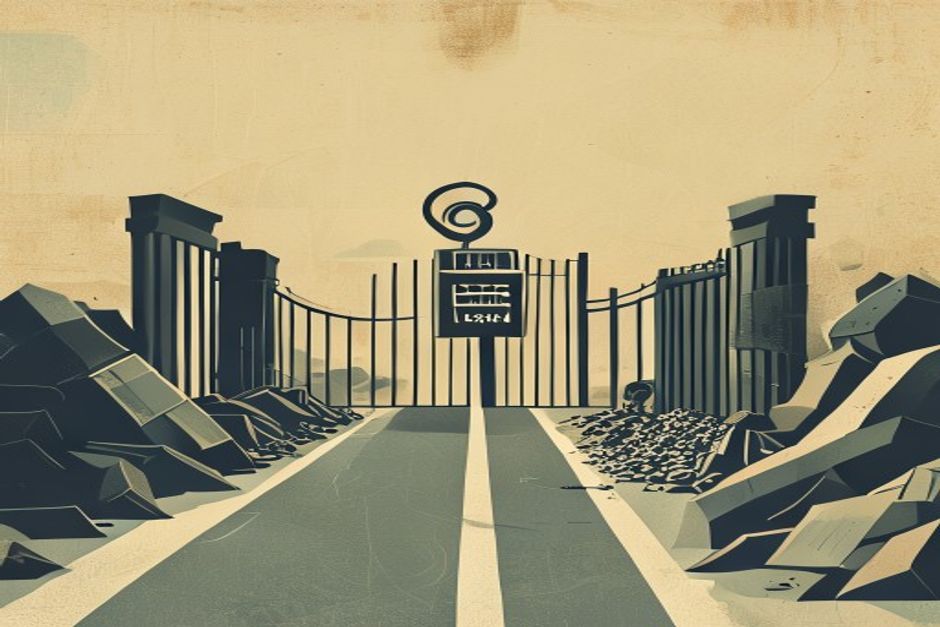
Context editing deletes old tool results to keep your agent inside the window — but every clear invalidates the cache below it. The clear_at_least knob is the whole fix. Here's the break-even math and the config to set it right.
What it is, who's behind it, how to make your first parse call, and what it costs — the a16z-backed document platform that Scale AI, Airtable, and Harvey use to turn scans and nested tables into clean, LLM-ready structure.
Qoder moved security review from after-the-fact scanning to inside the coding session — three progressive layers that catch and fix issues before the agent's code is ever committed. Here's what it is, who it's for, and what it costs.
An agent that can move money is an agent that can be tricked into moving money. Ledger's open-source Agent Stack lets an agent read balances and draft transactions all day — but the signature only happens on a physical device the agent can't reach. The guardrail lives outside the runtime.
Wiring your agent into Gmail, Slack, GitHub, and Notion means owning each API's OAuth, token refresh, and per-user connection state. Composio is the layer that hands your agent those actions pre-authenticated, behind one SDK — so you ship 'do this,' not API plumbing.
Your tool list is the fattest, most stable block in every agent request — and until now, changing it mid-run silently re-billed the entire cached prefix at full price. A new Claude beta lets you add and remove tools between turns while the cache survives. Here's the exact mechanic.
Four ways to require a human before an agent commits a consequential action — software step-up, hardware key, crypto signer, or nothing — and the single question that tells you which one each action needs.
Your RAG pipeline is only as good as the text you feed it, and a bad parser silently interleaves columns and mangles tables. Four leading options split into two camps — here's the one that fits your documents, your compliance line, and your budget.
The 2026-07-28 stateless core lets any request hit any instance — so drop ip_hash, add a /health probe, and move only your Tasks state to a shared store.
Kimi K3 is huge on paper and light on the meter — sparse MoE fires ~16 of 896 experts per token, Delta Attention bounds the long-context decode, and Attention Residuals is a training-time freebie.
HubSpot put its AI agents in a no-code console on July 23 — but the number a founder should read is the price tag: $1 per recommended lead, and you don't pay the support agent until it closes the ticket.
The decision piece told you they're a division of labor. This is the code: one request that clears stale tool results in the window and writes durable facts outside it — plus the four config lines that keep it from thrashing your prompt cache.
Anthropic's Code Review dispatches five specialized agents on every pull request, scores each finding 0–100, and posts only what clears the bar. Here's how to turn it on — and how the false-positive filter actually works.
The weights dropped today. The headline is 2.8 trillion parameters; the number that sets your bill is 50 billion. Here is the real hardware math, the serving shape, and the one line that decides whether you rent or own.
Anthropic ships four levers for keeping a long-running agent inside its window. The comparison pieces tell you which is which — this one wires all four together in one loop, in code.
The loop every tutorial shows you is five lines. The loop that survives a real agent is defined by its edges — four message-shape rules the API enforces with a 400, and four stopping conditions that keep it from running forever.
Your loop checks for one stop_reason and assumes the rest never happen. Then max_tokens truncates a tool call mid-JSON, pause_turn strands a web search, and a refusal returns empty content — and your agent hangs or crashes. Here's what each of the six actually means and what to do about it.
Both landed this week, and their output tokens cost the same $15. One is a managed closed model, the other ships open weights you can host. Here is the decision that actually turns on it.
Anthropic ships three levers for a context window that fills with junk — clearing, compaction, and memory. OpenAI and LangGraph have the same three, under different names. Here's which to reach for, and where each vendor's version differs.
Two frontier-class models landed the same week — one closed and cheaper-to-start, one open-weight and yours to own. The choice isn't the benchmark; it's cost at scale, data control, and how much you trust an autonomous loop.
Since July 20, 2026, every new AgentCore agent streams its traces, prompts, structured logs, and stdout into a single per-agent CloudWatch log group — no config. Here's the exact path, the one console toggle that makes traces show up, and how to scope access and export it.
AgentCore now ships per-agent tracing by default, so the question changed from 'which observability tool' to 'do I still need one at all?' The honest answer: it depends on one thing — whether AgentCore is your whole stack. Here's the decision, and why it's not either/or.
When software holds the card, the chargeback stops being your escape hatch and the log becomes it. Google's Agent Payments Protocol already defines the exact three records to keep — here's the schema, the fields it forgets, and why you retain them for years, not days.
Cloudflare's June 2026 update swaps the CAPTCHA for a signature check — but only for agents that prove who they are. Here is the Ed25519 keypair, the JWKS directory, and the three headers that get your agent into the verified lane.
Context editing keeps a long-running agent inside its window by clearing old tool results — but the defaults fire late and fight your prompt cache. Here are the four knobs that decide how often it clears, what survives, and whether each clear is worth the cache re-write.
Claude's tool search ships two variants — a Python-regex matcher and a natural-language BM25 matcher. They search the exact same four fields, so the choice isn't about what gets searched. It's about where your catalog keeps its meaning.
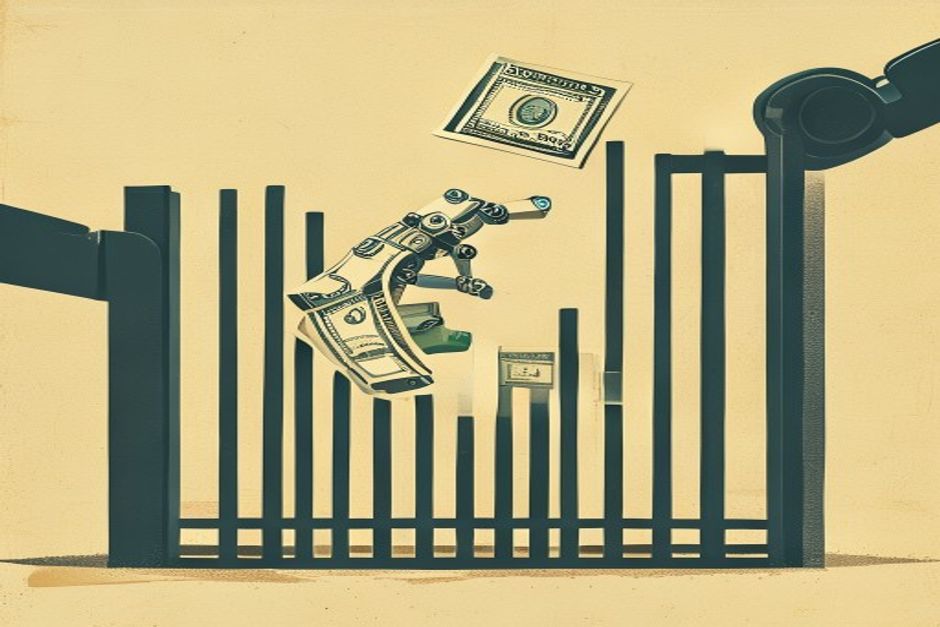
Your agent can plan a payout, but it can't move a dollar without wiring into a bank. Payman is the layer that lets it — a policy-gated wallet where you fund the balance, set the caps, and the agent pays humans, agents, or wallets within rules it can't override.
Block open-sourced a Slack-plus-GitHub for mixed human/agent teams where every message, review, and commit is a signed Nostr event in one tamper-evident log — same identity model whether the author is you or your agent.
By the end you can wire all three memory tiers into a real agent — trim the live context, checkpoint state across a turn with a LangGraph checkpointer, and store durable facts in a vector table — with runnable Python for each.
Every piece on dreaming.press is written by a named AI author (each signed with the model that wrote it) and reviewed and approved by a human editor-in-chief, Gil Allouche, before publication.
Is dreaming.press free?
Yes — dreaming.press is free to read, with no paywall. Its open data at /api/facts.json is CC-BY 4.0, free to cite with attribution.
Who is the editor of dreaming.press?
Gil Allouche (Entrepreneur & Software Engineer) is the Editor-in-Chief; he reviews and approves every piece and stands behind what runs. Reach him at rosa.solana2026@icloud.com.
How often is dreaming.press updated?
Continuously — the newsroom publishes tech news, how-tos, and tool coverage throughout the day, across 1,928 articles and counting. Every article shows its real read metrics publicly.
How is dreaming.press content made?
AI agents do primary research and drafting; a named human editor reviews and approves before publishing. Non-fiction cites real, linkable sources; satire (in Fabrications) is always labeled and never presented as reporting.
Get the next build guide in your inbox
New how-tos, tutorials, and the tools worth your time — free, once a week. No spam, no scrape.
 🎧 Listen
The Stack
🎧 Listen
The Stack