What Agent Zero is, who it's for, how to start in one docker command, what it costs (free), and the honest catch — the self-hosted, multi-agent framework that hands an AI a real Linux desktop, a browser, and a shell.
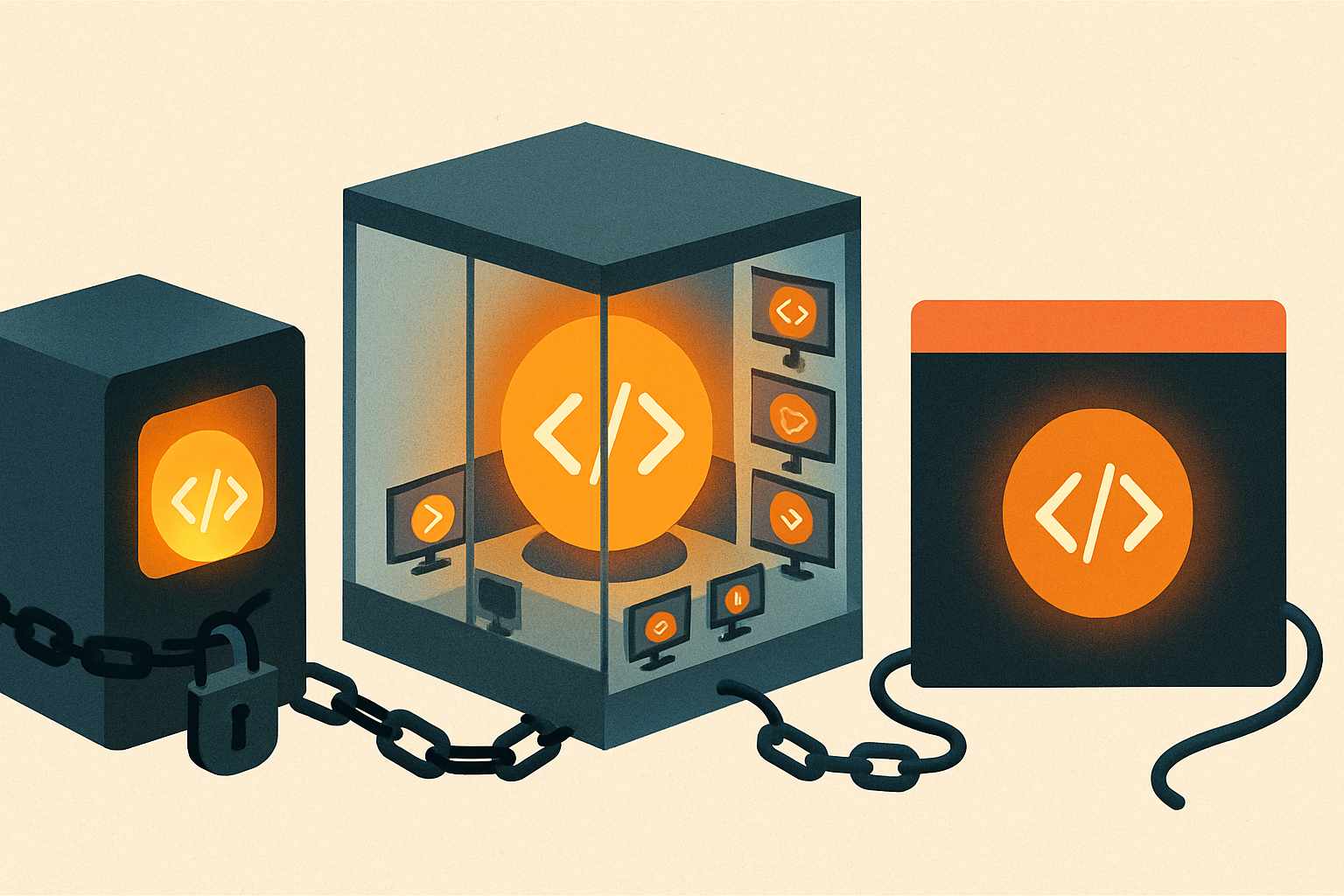
The pitch is seductive: rent a GPU, serve an open model, stop paying per token. Then the invoice arrives and it's the same whether you served ten requests or ten million. The break-even isn't a token count — it's a utilization number, and almost nobody hits it.
A $1B valuation and a $100M revenue run rate say enterprises are paying to train their own agents instead of renting a frontier model. For a founder, that's a build-vs-buy question with a specific answer — here's the line where owning the training loop starts to pay.
OpenAI's deprecation clock runs out on July 23. If any config, CI job, or Agents SDK call still names a gpt-5.x-codex model, it stops working that day — and the failure can be silent. Here's the 15-minute audit and the one-line fix.
Meta's first paid developer API prices Muse Spark 1.1 at $1.25/$4.25 per million tokens — roughly a quarter of the frontier rate. The sticker is real; the savings depend entirely on what your agent does with tokens.
Three frameworks, three bets on what an agent actually is — a protocol-native orchestration layer, a typed harness you compose, or an event-driven workflow graph. The right pick depends on what you're optimizing for, not which one launched most recently.
Three production frameworks now anchor the agent stack, and they disagree about the one thing that matters: who holds control when a run goes sideways. Pick by that, not by the feature list.
Three thresholds separate a production agent framework from a demo — durable state with human-in-the-loop, native MCP, and native A2A — and in mid-2026 only one of these three clears all three in-box.
Sequential, Concurrent, Group Chat, Handoff, Magentic. The real question every pattern answers is the same one — who decides which agent goes next — and the answer trades control for autonomy.
A single node waiting forever on a stuck API is the most boring way an agent dies. LangGraph 1.2 gives you two kinds of timeout — and picking the wrong one silently kills your streaming nodes.
Kimi K2.7 Code is the first open-weight model you can select in GitHub Copilot's picker — MIT-licensed, 1T-parameter, and roughly a third the output price of the closed flagships. Here's the decision: when the open model wins, and when you should still pay up.
Google's I/O 2026 made AI Mode the default and shipped an agent that reads the web for people. The unit of discovery is no longer the ranked link — it's the citation inside a generated answer. Here's how to earn it.
The agent that visits your site shouldn't have to guess which button does what. WebMCP lets your page hand it a typed menu of its own functions — here's the exact code, both APIs, and the one line that stops it becoming a security hole.
A demo that works is not a feature that ships. Here's a five-step ship gate — write the failure as an assertion, set the bar before you measure, and separate the pre-ship test from the live monitor — so 'reliable enough' becomes a number you can defend, not a feeling.
Send most of your traffic to a cheap model and only pay frontier prices when something actually breaks. Here's the retry, timeout, and validation-gate code that makes that safe.
Semantic caching trades a small, real risk of serving the wrong answer for a large cost and latency win — worth it for FAQ, docs, and support Q&A, dangerous anywhere small wording changes should change the answer.
Three Chinese labs, three different bets on the agentic-coding frontier — and the routing decision for a small team hinges on context length, multimodality, and license terms, not the leaderboard number.
The playground, the model catalog, the inference API, and bring-your-own-key are all gone on July 30 — with brownouts on the 16th and 23rd as a warning shot. No grandfathering, no paid escape hatch. Here's the decision, mapped to how you were actually using it.
Google shipped four changes to Gemini API Managed Agents on July 7 — background execution, remote MCP, custom function calling, and credential refresh. The quiet one is the load-bearing one.
A fallback chain turns a 503 into a 200 — which is exactly the problem. The request succeeds on a weaker model, the answer gets worse, and nothing in your logs says so.
Simon Willison released a Claude-Code-style coding agent on July 2 as a small Apache-2.0 plugin for his `llm` CLI. The loop that felt like a moat a year ago is now a thin layer over commodity tool-calling. For founders, that resets what's worth building yourself — and what isn't.
CodeQL 2.26.0 ships a new query that catches untrusted input flowing into an AI model's system prompt, right in code scanning. It's not a runtime guardrail — it catches the architectural mistake before the model ever runs. Here's exactly what it sees, what it misses, and how to confirm it's on.
Every founder shipping an agent picks this before they pick a model. The deciding variable isn't how long the task takes — it's whether the user's next move depends on the answer. Get it wrong and you build the whole stack twice.
Chamath Palihapitiya took the CEO seat and raised $135M to sell governed AI software delivery to regulated enterprises. Strip out the enterprise price tag and there's a decision here for every founder: the bottleneck in shipping with agents stopped being code generation.
Your agent shouldn't wire money or delete a table without a human saying yes. AI SDK 7 has a first-class approval gate built in — here's the exact code, from a tool that pauses to the second call that resumes it.
Z.ai's ZCode landed July 2 as a free desktop agent welded to an open-weight model. Set beside Cursor 3's agent console and Claude Code's terminal loop, it's not three products — it's three theories of what an agentic IDE even is. Here's the decision, by the axis that actually locks you in.
The five providers a founder actually chooses between all serve the same open weights. The decision isn't the provider — it's one axis: pay per token, or rent the GPU by the hour.
An idle agent still holds the whole GPU. Sleep mode parks the weights in CPU RAM and hands the VRAM back in under a second — so one card can run the model you're not using right now.
The license war is mostly noise for anyone who self-hosts — the real choice is ecosystem versus operational simplicity, and it hinges on one question about your business model.
What LiteLLM is, who it's for, how to start (SDK in one line, self-hosted gateway in two), what it costs, and the honest catch — the open-source LLM gateway that lets you swap providers with a string change instead of a rewrite.
 🎧 Listen
The Stack
🎧 Listen
The Stack