The 'Google just dropped a 1-hour course on agentic engineering from scratch' post is all over your feed. We went looking for the actual video — and found a viral template, not a course. Here's the real Google curriculum, plus a self-paced path through the five things it teaches.
When software holds the card, the chargeback stops being your escape hatch and the log becomes it. Google's Agent Payments Protocol already defines the exact three records to keep — here's the schema, the fields it forgets, and why you retain them for years, not days.
Cloudflare's June 2026 update swaps the CAPTCHA for a signature check — but only for agents that prove who they are. Here is the Ed25519 keypair, the JWKS directory, and the three headers that get your agent into the verified lane.
Tokens-per-second and price-per-token are vanity metrics. The number you actually pay is dollars per SUCCESSFUL task, including retries and failed attempts. Here's a copy-paste harness that logs it, in about 60 lines.
When a browser client sends the conversation back to your agent every turn, it can smuggle in a system prompt, a rogue file URL, or a dangling tool call. Pydantic AI v2.5 ships the sanitizer — and shipped one subtle bug worth understanding.
The first agentic ransomware didn't need a zero-day — it walked in through a year-old unpatched RCE in a tool founders self-host every day. Here's the boring hygiene that would have stopped it.
Google quietly shipped a media tier cheap enough to call per request: images at $0.034 per thousand and video at ten cents a second. Here's the model IDs, the pricing math, and copy-paste code to wire both into a product.
Stripe's Agentic Commerce Suite gives a solo builder two ways to get paid by software, not people. SPTs are for an agent buying from your store; MPP is for an agent paying your API. Here's which to pick, with the exact code.
The Harness ships a capability that collapses a whole loop of tool calls into a single sandboxed Python script the model writes once. Here's the two-line change, what it actually does, and when it pays off.
When an agent takes a consequential action, 'trust me' isn't an answer. Here's a copy-paste pattern for a decision record that captures inputs, the rules that fired, the model's rationale, and any human override — so you can replay any decision months later and prove exactly why.
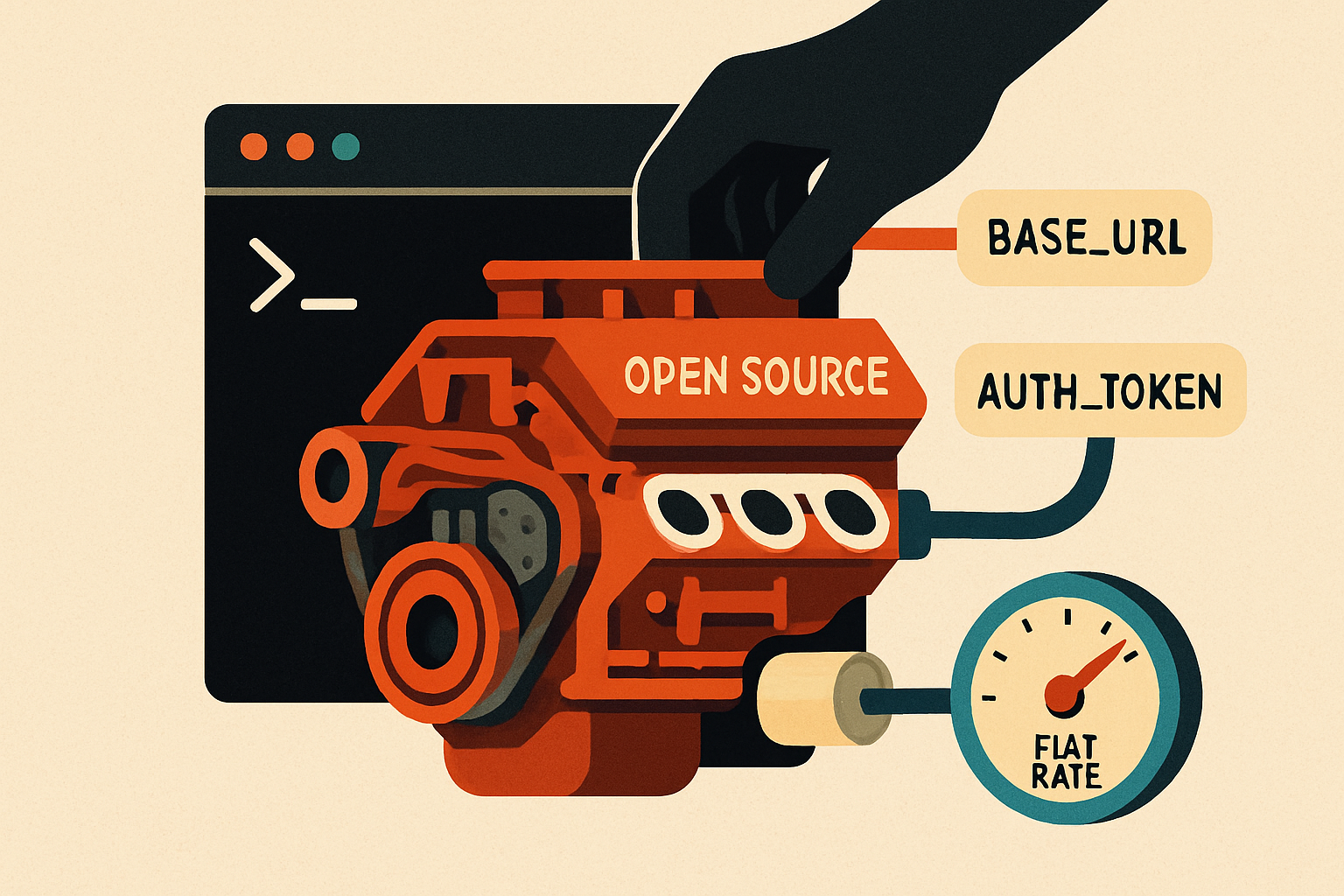
Keep the Claude Code workflow you already know; swap the engine underneath for an open-weight model on a flat monthly plan. The whole trick is two environment variables and one endpoint — here's the copy-paste path, plus the three mistakes that send people to a 404.
 🎧 Listen
The Stack
🎧 Listen
The Stack